

Quick answer
Traditional tango bars in Buenos Aires open at 20:00 Monday through Sunday, with nightly performances beginning at 22:00. Entry starts at 69.9 USD per person for the show alone at historic San Telmo venues, excluding optional dinner service and transfers. Arriving between 20:30 and 21:45 gives you time to settle in, order drinks, and absorb the atmosphere before the orchestra takes the stage. The best venues cluster in San Telmo and Boedo, where century-old establishments still host both tourists and neighborhood regulars under the same roof.
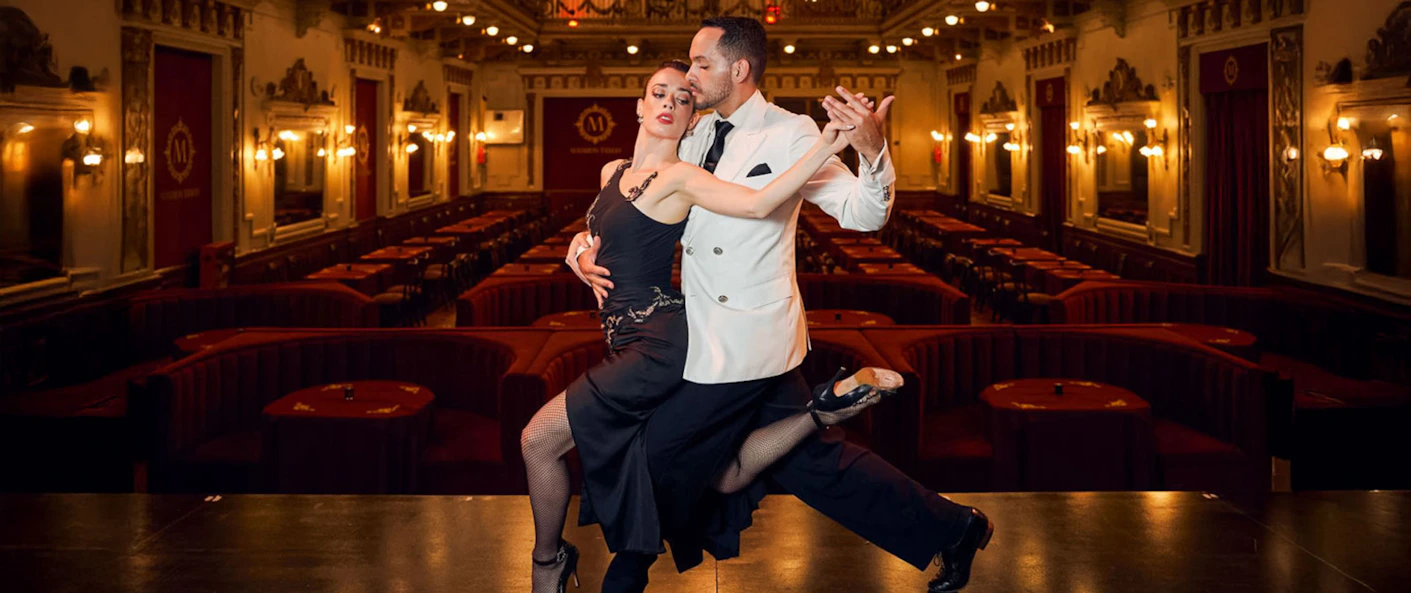
Viejo Almacén sits at Balcarce 799 in San Telmo, occupying a colonial building that served as a general store in 1769 before transforming into one of the city's first dedicated tango venues in 1969. The exposed brick walls and low ceilings channel sound in a way modern concert halls cannot replicate, and the wooden dance floor carries the scuff marks of five decades of heel strikes. This is not a dinner-theater styled for cruise-ship crowds—it is a working tango bar that happens to welcome visitors. Authentic tango bars in Buenos Aires distinguish themselves by their adherence to códigos, the social grammar that governs who dances, when, and with whom. At traditional milongas, dancers use the cabeceo—a subtle nod across the room—to invite partners, never a verbal ask on the floor itself. The bar area remains separate from the dance floor, and conversations drop to murmurs when the cortina—the musical interlude between tandas—ends and the next set begins. Viejo Almacén preserves these codes during its nightly performances, where professional dancers demonstrate the close-embrace style that originated in the port neighborhoods of La Boca and San Telmo in the 1880s. The venue operates seven nights a week, with the most intimate atmosphere mid-week when smaller crowds allow the space to breathe. The bar serves Malbec, fernet con coca, and simple picadas—cheese and cured meat boards—but the focus remains on the dance. The orchestra typically includes bandoneón, violin, piano, and double bass, the same configuration that accompanied Carlos Gardel when he recorded "Mi Noche Triste" in 1917 and codified tango as a distinct musical form. San Telmo's concentration of tango venues reflects its history as the neighborhood where European immigrants and criollo laborers collided in the late 19th century, creating the cultural friction that birthed the dance. Walking Balcarce or Defensa after dark, you pass half a dozen venues within three blocks, each with its own lineage and reputation. The density makes it possible to hear three different orchestras in one night, but it also means that not every venue maintains the standards that matter to serious dancers. Viejo Almacén's longevity—nearly six decades under the same family—signals a commitment to the form that newer establishments often lack.
“The wooden dance floor carries the scuff marks of five decades of heel strikes, and the códigos remain as strict as they were when the venue opened in 1969.”
Weekly Operating Schedule for Tango Bars in Buenos Aires
The venue maintains a consistent nightly schedule to accommodate guests throughout the week. Doors open daily at 20:00 to facilitate evening dinner service and pre-show preparations.
| Monday | 20:00–00:00 | |
|---|---|---|
| Tuesday | 20:00–00:00 | |
| Wednesday | 20:00–00:00 | |
| Thursday | 20:00–00:00 | |
| Friday | 20:00–00:00 | |
| Saturday | 20:00–00:00 | |
| Sunday | 20:00–00:00 |
How to Reach Tango Bars in Buenos Aires
The venue is located at Balcarce 799 in the historic San Telmo neighborhood. It is easily accessible via the Buenos Aires public transport network or by private vehicle.
Line A (Plaza de Mayo station) and short walk
Lines 28, 64, or 126 to Balcarce stop
Direct drop-off at Balcarce 799
Best Time to Visit Tango Bars in Buenos Aires
The best arrival window for experiencing the venue is 20:30–21:45. Arriving during this period allows guests to settle in and enjoy the atmosphere and optional dinner service before the 22:00 show begins.
Autumn (April–May)
Moderate crowdsMild, 15°C to 22°C. These months offer comfortable temperatures for exploring San Telmo before evening performances.
Spring (September–November)
Increasing crowdsPleasant, 16°C to 24°C. The city is active and gardens are in bloom, making it a popular time for visitors.
Summer (December–February)
High crowdsWarm and humid, 20°C to 30°C. Evenings remain busy as tourists take advantage of the late-night cultural scene.
Winter (June–August)
Lower crowdsCool, 8°C to 16°C. While cooler, this period provides a more intimate setting for indoor tango performances.
Verdict: The best arrival window is between 20:30 and 21:45, particularly during the mild climate of April or October.
The Historical Legacy of Tango Bars in Buenos Aires
The tradition of tango bars in Buenos Aires emerged in the late nineteenth century within the port neighborhoods of La Boca and San Telmo, where European immigrants and local workers gathered in pulperías and conventillos. These informal venues became incubators for a dance born from African candombe rhythms, Spanish flamenco, and Italian melody. By the 1880s, tango had crystallized as a distinct form, though polite society initially rejected it as vulgar. The milongas—dedicated dance halls—appeared in the early 1900s, offering structured social spaces where men practiced intricate footwork and women learned the close embrace that defined the dance. The genre's fortunes shifted when Carlos Gardel rose to international fame in the 1920s, legitimizing tango for middle-class audiences. Venues like Café Tortoni and later establishments in San Telmo transitioned from smoky backrooms to celebrated cultural institutions. The military dictatorship of 1976–1983 suppressed public gatherings, forcing many historic tango bars in buenos aires to close permanently. Democratic restoration in 1983 sparked a revival, with surviving venues reopening and new generations rediscovering the dance through renewed milonga circuits and dinner shows. Today, landmark addresses such as Viejo Almacén on Balcarce Street preserve original architectural elements—exposed brick walls, vintage Edison bulbs, wooden stages worn smooth by decades of performance. Visitors encounter the same close-quarters intimacy that defined early milongas, now framed by professional orchestras and choreographed demonstrations that honor the improvisational spirit of the genre's formative years.
Tango emerges in La Boca and San Telmo from African, Spanish, and Italian musical traditions practiced in immigrant conventillos.
Dedicated milongas open across Buenos Aires, providing structured venues for social dancing and footwork refinement.
Carlos Gardel records "Mi Noche Triste," marking tango's transition from dance to vocal art form with mass appeal.
International tours by Gardel and orchestras legitimize tango among European and North American audiences, elevating its cultural status.
Military dictatorship restricts public gatherings; many historic tango venues close permanently under censorship and curfew policies.
Democratic restoration triggers a tango renaissance; surviving bars reopen and new milongas establish regular schedules.
UNESCO inscribes tango as Intangible Cultural Heritage of Humanity, affirming its significance to Argentine identity and global dance tradition.
Check availability
Frequently Asked Questions About Tango Bars in Buenos Aires
Everything you need to know about tango bars in buenos aires